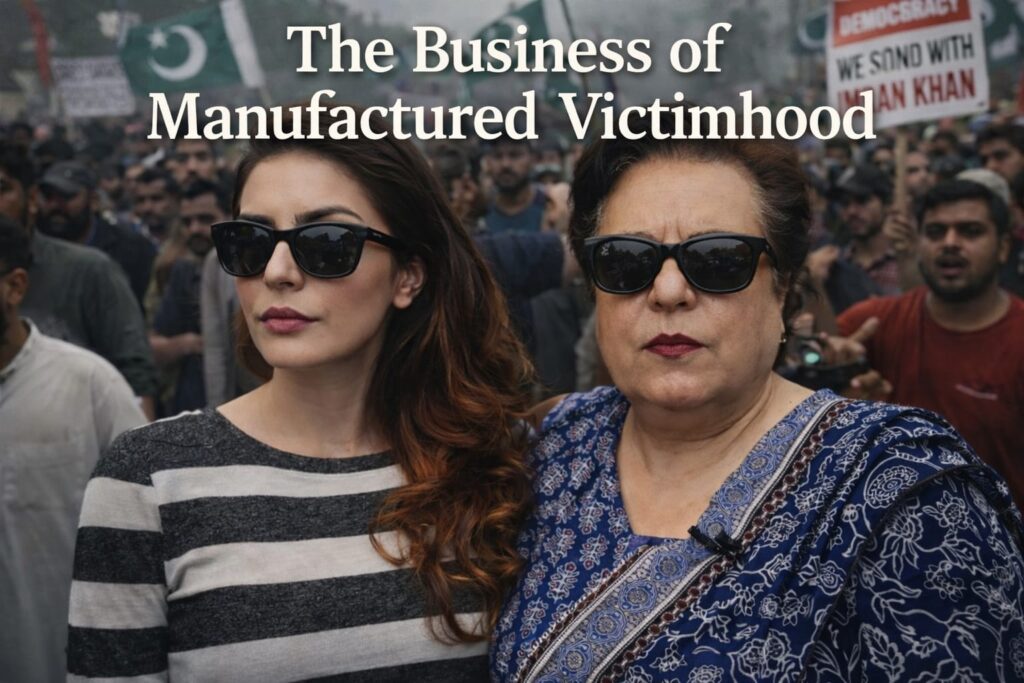
She called herself a “rights defender.” In our play, the imaginary character “Bibi Shireen” is introduced as a fearless social media activist, a woman “speaking truth to power.” But her truth is a curated rage, built on text posts, anonymous reposts, and a carefully constructed echo chamber, what her circle smugly brands an “aqua chamber,” where only one kind of story survives, anything that vilifies state institutions, especially the security forces.
“Bibi Shireen” does not investigate. She amplifies.
She is remarkably skilled at picking up posts from unknown handles, half-baked “insider” threads, and screenshots without source or context. Then she reposts them with moral certainty, adding just enough insinuation to turn allegation into verdict. A single rumor becomes a “pattern,” a single accusation becomes a “system,” and every incident is forced into one storyline, the state is evil, the uniform is guilty, and anyone fighting militants is automatically suspect.
Her hatred for institutions is not critique, it is obsession. She frames law enforcement as the primary threat, while quietly laundering sympathy for militants as “context,” “grievance,” and “resistance.”
She never says “proscribed organization” out loud, she doesn’t need to. She becomes their unofficial spokesperson through slogans, selective narratives, and constant justification, turning militancy into a misunderstood cause and terror into a reaction.
The most cynical part is the facade. “Bibi Shireen” wraps herself in human rights language, due process, dignity, freedom of speech, but uses it as cover for nefarious work, incitement, chaos, and targeted misinformation. Real victims become props. Real human rights work becomes collateral damage, because her theatrics make genuine advocacy look like a racket.
When challenged, she reaches for the woman card. Not empowerment, weaponization. “How dare you question a woman,” she says, turning accountability into “misogyny.” Criticism becomes harassment, verification becomes oppression, and any fact-check becomes “state pressure.”
Then comes the legal fog, her linkages and name-dropping. Advocates, friendly bar rooms, whispered judge connections. Whether real or exaggerated, the message is intimidation, she is untouchable. She speaks foul language at opponents, doxxes critics, calls for “street justice,” and encourages crowds to “teach lessons,” taking the law into her own hands while claiming to defend the law.
Foreign endorsement arrives on schedule. A familiar pattern follows her spikes, selective outrage, carefully worded statements, “civil society” applause, and “observers” who appear like diplomats but behave like activists. The agenda is simple, delegitimize security institutions, keep the pot boiling, and then call the flames “freedom.”
Eventually, the state does what states must, it registers a case. The charges are straightforward, spreading fake news propaganda, glorification of terrorism and militancy, and acting as a mouthpiece for proscribed outfits. And then the spectacle begins.
Her group storms the court space, sympathetic journalists, self-styled human rights voices, and foreign actors posing as neutral dignitaries.
They mud-sling the judge and prosecution, shout over procedure, and try every pressure tactic to frame accountability as “persecution.”
But the law is not a stage forever.
She called herself a “rights defender.” In our play, the imaginary character “Bibi Shireen” is introduced as a fearless social media activist, a woman “speaking truth to power.” But her truth is a curated rage, built on text posts, anonymous reposts, and a carefully constructed echo chamber, what her circle smugly brands an “aqua chamber,” where only one kind of story survives, anything that vilifies state institutions, especially the security forces.
“Bibi Shireen” does not investigate. She amplifies.
She is remarkably skilled at picking up posts from unknown handles, half-baked “insider” threads, and screenshots without source or context. Then she reposts them with moral certainty, adding just enough insinuation to turn allegation into verdict. A single rumor becomes a “pattern,” a single accusation becomes a “system,” and every incident is forced into one storyline, the state is evil, the uniform is guilty, and anyone fighting militants is automatically suspect.
Her hatred for institutions is not critique, it is obsession. She frames law enforcement as the primary threat, while quietly laundering sympathy for militants as “context,” “grievance,” and “resistance.”
She never says “proscribed organization” out loud, she doesn’t need to. She becomes their unofficial spokesperson through slogans, selective narratives, and constant justification, turning militancy into a misunderstood cause and terror into a reaction.
The most cynical part is the facade. “Bibi Shireen” wraps herself in human rights language, due process, dignity, freedom of speech, but uses it as cover for nefarious work, incitement, chaos, and targeted misinformation. Real victims become props. Real human rights work becomes collateral damage, because her theatrics make genuine advocacy look like a racket.
When challenged, she reaches for the woman card. Not empowerment, weaponization. “How dare you question a woman,” she says, turning accountability into “misogyny.” Criticism becomes harassment, verification becomes oppression, and any fact-check becomes “state pressure.”
Then comes the legal fog, her linkages and name-dropping. Advocates, friendly bar rooms, whispered judge connections. Whether real or exaggerated, the message is intimidation, she is untouchable. She speaks foul language at opponents, doxxes critics, calls for “street justice,” and encourages crowds to “teach lessons,” taking the law into her own hands while claiming to defend the law.
Foreign endorsement arrives on schedule. A familiar pattern follows her spikes, selective outrage, carefully worded statements, “civil society” applause, and “observers” who appear like diplomats but behave like activists. The agenda is simple, delegitimize security institutions, keep the pot boiling, and then call the flames “freedom.”
Eventually, the state does what states must, it registers a case. The charges are straightforward, spreading fake news propaganda, glorification of terrorism and militancy, and acting as a mouthpiece for proscribed outfits. And then the spectacle begins.
Her group storms the court space, sympathetic journalists, self-styled human rights voices, and foreign actors posing as neutral dignitaries.
They mud-sling the judge and prosecution, shout over procedure, and try every pressure tactic to frame accountability as “persecution.”
But the law is not a stage forever.
Tonight, “Bibi Shireen” is hiding, planning to slip out in the dark, chasing the old illusion that she can outrun consequence. Yet sooner or later, she will face the court she mocked. And when she does, the real moral of the play lands quietly, no one is above the law, not even those who weaponize the language of justice to protect chaos.She called herself a “rights defender.” In our play, the imaginary character “Bibi Shireen” is introduced as a fearless social media activist, a woman “speaking truth to power.” But her truth is a curated rage, built on text posts, anonymous reposts, and a carefully constructed echo chamber, what her circle smugly brands an “aqua chamber,” where only one kind of story survives, anything that vilifies state institutions, especially the security forces.
“Bibi Shireen” does not investigate. She amplifies.
She is remarkably skilled at picking up posts from unknown handles, half-baked “insider” threads, and screenshots without source or context. Then she reposts them with moral certainty, adding just enough insinuation to turn allegation into verdict. A single rumor becomes a “pattern,” a single accusation becomes a “system,” and every incident is forced into one storyline, the state is evil, the uniform is guilty, and anyone fighting militants is automatically suspect.
Her hatred for institutions is not critique, it is obsession. She frames law enforcement as the primary threat, while quietly laundering sympathy for militants as “context,” “grievance,” and “resistance.”
She never says “proscribed organization” out loud, she doesn’t need to. She becomes their unofficial spokesperson through slogans, selective narratives, and constant justification, turning militancy into a misunderstood cause and terror into a reaction.
The most cynical part is the facade. “Bibi Shireen” wraps herself in human rights language, due process, dignity, freedom of speech, but uses it as cover for nefarious work, incitement, chaos, and targeted misinformation. Real victims become props. Real human rights work becomes collateral damage, because her theatrics make genuine advocacy look like a racket.
When challenged, she reaches for the woman card. Not empowerment, weaponization. “How dare you question a woman,” she says, turning accountability into “misogyny.” Criticism becomes harassment, verification becomes oppression, and any fact-check becomes “state pressure.”
Then comes the legal fog, her linkages and name-dropping. Advocates, friendly bar rooms, whispered judge connections. Whether real or exaggerated, the message is intimidation, she is untouchable. She speaks foul language at opponents, doxxes critics, calls for “street justice,” and encourages crowds to “teach lessons,” taking the law into her own hands while claiming to defend the law.
Foreign endorsement arrives on schedule. A familiar pattern follows her spikes, selective outrage, carefully worded statements, “civil society” applause, and “observers” who appear like diplomats but behave like activists. The agenda is simple, delegitimize security institutions, keep the pot boiling, and then call the flames “freedom.”
Eventually, the state does what states must, it registers a case. The charges are straightforward, spreading fake news propaganda, glorification of terrorism and militancy, and acting as a mouthpiece for proscribed outfits. And then the spectacle begins.
Her group storms the court space, sympathetic journalists, self-styled human rights voices, and foreign actors posing as neutral dignitaries.
They mud-sling the judge and prosecution, shout over procedure, and try every pressure tactic to frame accountability as “persecution.”
But the law is not a stage forever.
Tonight, “Bibi Shireen” is hiding, planning to slip out in the dark, chasing the old illusion that she can outrun consequence. Yet sooner or later, she will face the court she mocked. And when she does, the real moral of the play lands quietly, no one is above the law, not even those who weaponize the language of justice to protect chaos.
Author:
Ahmed Saleem is a freelance writer with an academic background in literature, with a professional focus on structured, research-oriented, and analytical writing.
Contact: ahmed.saleem35089@gmail.com